Okay, I thought I’d provide some relief from all the posts on AI, influencers, or the demise of third-party cookies. I’d like to talk, briefly, about LOUSY commercials. Or more specifically, tired, hackneyed scenarios masquerading as concepts that still find their way into today’s traditional media like TV and radio. And for some pretty big-name advertisers.
Let’s start with a basic premise: if your product or sale is so great, you don’t need to create fake urgency or a silly alternate universe where consumers everywhere are overwhelmed by it and respond instantly. Somewhere, a new copywriter must have been convinced that THEIR interpretation of this cobweb-covered fossil was funny enough to break the mold (or knock the mold off).
The “drop everything and run” cliche.
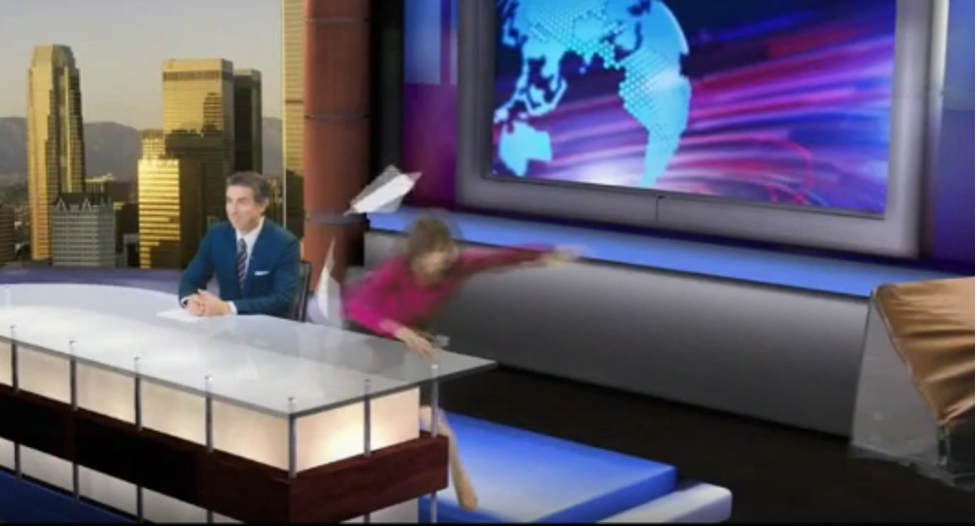
At the moment, Domino’s is barreling down this well-worn path. The announcer mentions a 50% off promotion “right now” That leads to several astonished people excitedly repeating the “right now” and stopping what they’re doing to head for Dominos. (I guess the company temporarily suspended its obsession with delivery for this campaign.)
The gobsmacked consumers include a lady washing her car and the mandatory news anchor who tosses her scripts in the air and rushes off set to get the deal. Then, of course – and get ready for the knee slapper – a guy fresh from the shower clad only in a towel races off to get in on this life-changing pizza discount. Wow, get ready, Cannes.
The approach is not new, of course, that’s the point. The same principle applies to many an automotive brand, including higher-end nameplates. The vehicles roll through town, attracting open-mouthed stares and admiration, and often a flock of groupies chasing it to get a better look. Oh, please.
The “stunned actors” schtick.
This one is currently being abused in radio spots for a cell service provider. The old “talent at the mic” dialogue with the studio engineer. She’s supposed to read the script, but the offer is SO good, she questions the engineer about it. (He delivers the only decent moment in the spot with a snide “that’s what it says.”)
She, of course, is out the door without completing the spot. Heh heh, I can’t stop laughing.
Others deserving retirement.
In an earlier edition of his classic book “Hey, Whipple, Squeeze This” Luke Sullivan had a section of commercial ideas/situations that have become tired parodies of themselves. I love his list, which includes spots that feature manufactured “game shows.” True confessions, I did one of those early in my career, but honest, mine was great.) Another moldy oldie is the faked “breaking news” item complete with interruptive sound effects.
I would personally add those forced structures developed to allow the writer to cram in every possible product feature to please the client. Obviously, there was no adult in the room to apply the critical discipline to decide which one was most important. Let’s call it the laundry list approach.
“What makes XXXXXXXX carpet cleaning service the best? Is it our unique cleaning chemicals? Or our prompt reliable service? Or our state-of-the-art X400 Steam Cleaning Machine? Well, it just MIGHT be our low, low prices.”
Sometimes these are presented as two “consumers” allegedly discussing the brand, or employees trying to write the company jingle, etc. Either way, it has the unique ability to make consumers glaze over and a sample reel instantly invisible. The strategy (or lack of a real one) is just so darned transparent.
Oh well, aspiring copywriters (or those who should know better) should try to avoid these creative potholes. I’d share more, but WOW, I just heard there’s a big sale on RIGHT NOW at

 Marn's Market